Think about the last time your doorbell rang, and you could not get to it.
Maybe you were on a work call. Maybe you were in the other room. Maybe life was just happening, the way it does. You missed it. Whoever was there — left.
Most of the time, it is fine. A courier reschedules. A friend sends a text.
But what if it was not fine? What if the person standing outside your door was not waiting to deliver a package — but waiting for someone to help them?
That is the question most doorbells have never been built to answer. Not every doorbell has this — but the ones that do, change everything.
We Have Made Our Homes Smarter. But Have We Made Our Doors Smarter?
Video doorbells are now a standard fixture in many new homes, often integrated with smart locks for full remote access control. About 37% of households now use a video doorbell — making it one of the fastest-growing home security devices in the world, with usage rising by 12 percentage points year over year.
And yet, for all that growth, most doorbells still do the same thing they always did. They ring. They show you who is there. And if you are not watching — they do nothing.
The two biggest motivators behind buying smart home technology are convenience and security — with 78% of adults citing convenience as the top reason. But when those two things collide at the door — when a visitor cannot reach you, or when someone outside needs immediate help — most smart doorbells still fall short.
That gap is exactly where the two most important doorbell features come in.
The Two Moments Every Door Eventually Faces
There are two situations that happen at doors everywhere — in apartment complexes, gated societies, villas, and residential buildings across the country. They are not rare. They are not edge cases. They happen every single day.
The first is an emergency outside the door. The second is a visitor the resident simply could not answer in time.
Both are solvable. Both are solved — right inside a doorbell built for exactly these moments.
Feature One — SOS: When Someone Outside Needs Help Right Now
Picture this. An elderly woman stumbles on the steps near the entrance of her building. A resident feels threatened by someone at the gate late at night. A child is locked out, alone, frightened in the corridor.
In each of these situations, the person outside does not need to ring a flat. They do not have time to call a number or navigate an app. They need to reach the security guard — right now, in seconds.
That is exactly what the SOS feature does.
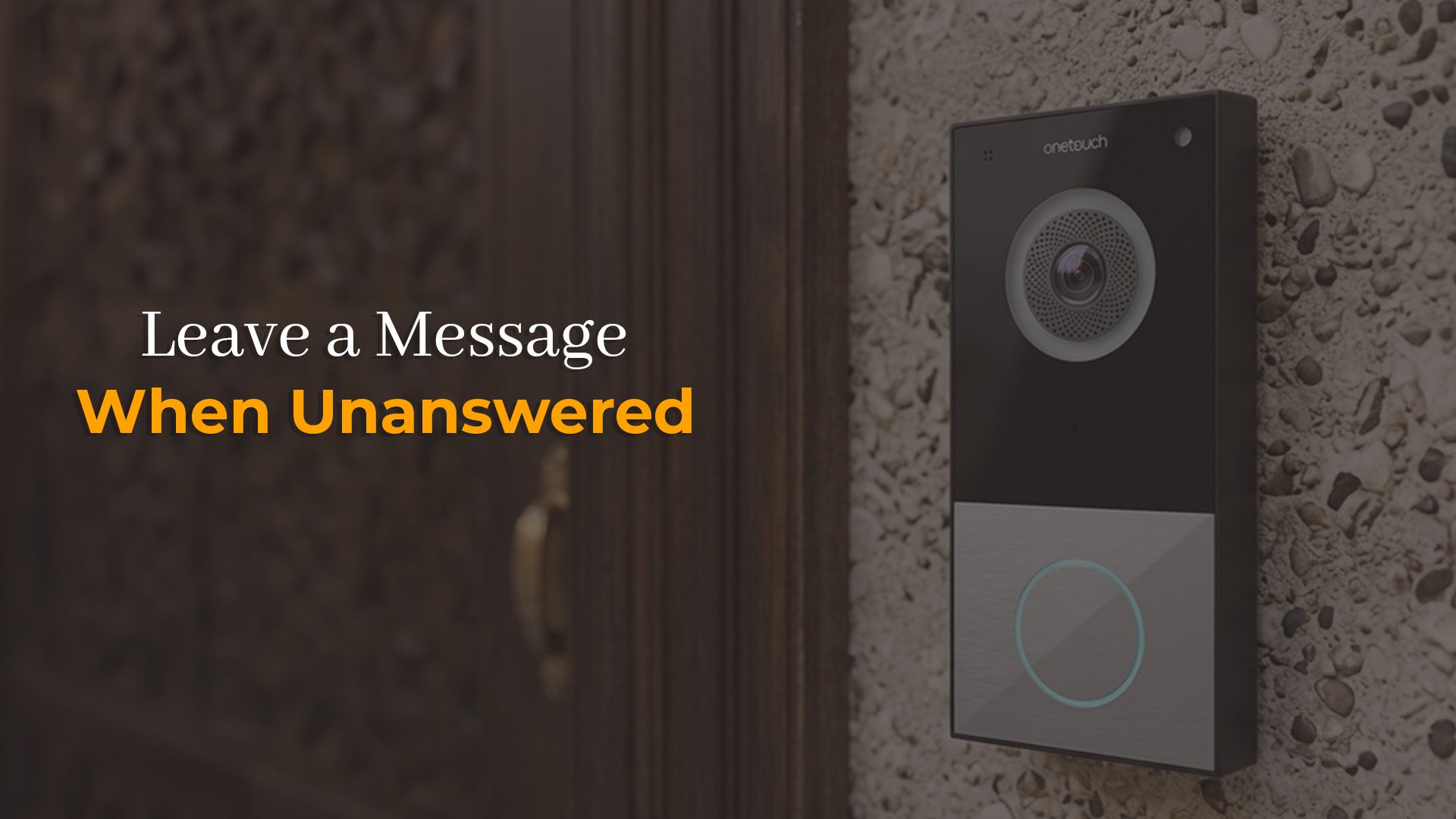
A long press on the doorbell button — not a regular ring, but a deliberate hold — instantly places a direct call to the security guard stationed downstairs. No steps. No menu. No delay. The guard’s phone rings in real time and he responds immediately.
By 2026, the direction of smart home security is clearly toward real-time response — systems that do not just record what happened but actively connect people to help when it matters. The SOS feature is built on exactly that principle. It does not wait for a resident to pick up. It goes straight to the person whose job is to respond.
In a real building, with a real guard, that is exactly how those seconds unfold.
For builders and architects: think about what it means to hand over a project where this is already built in. Where your residents move in and the building already has their back — from day one. The home security market is valued at $56.1 billion today and is on track to reach $93 billion before 2030. The builders integrating these features now are not just ahead of the curve — they are defining what residential living looks like for the next decade.
Feature Two — Leave a Message: So, No Visit Is Ever Truly Missed
Now for the quieter problem. Less dramatic. But far more frequent.
You are on a call. You are with your child. You are in the shower. The doorbell rings — once, twice — and by the time you get there, the person is gone. No note. No way to know who came, what they needed, or whether it mattered.
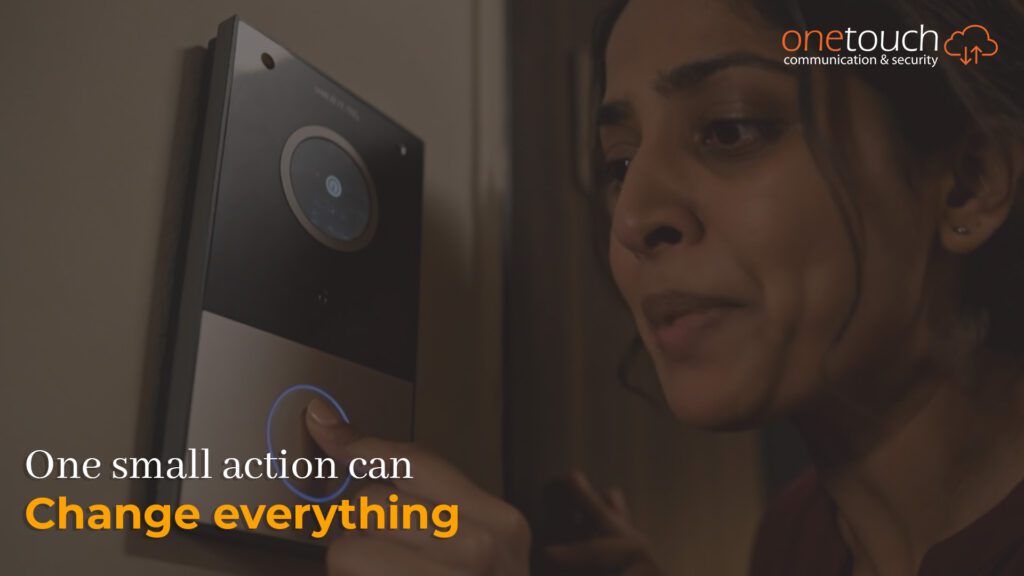
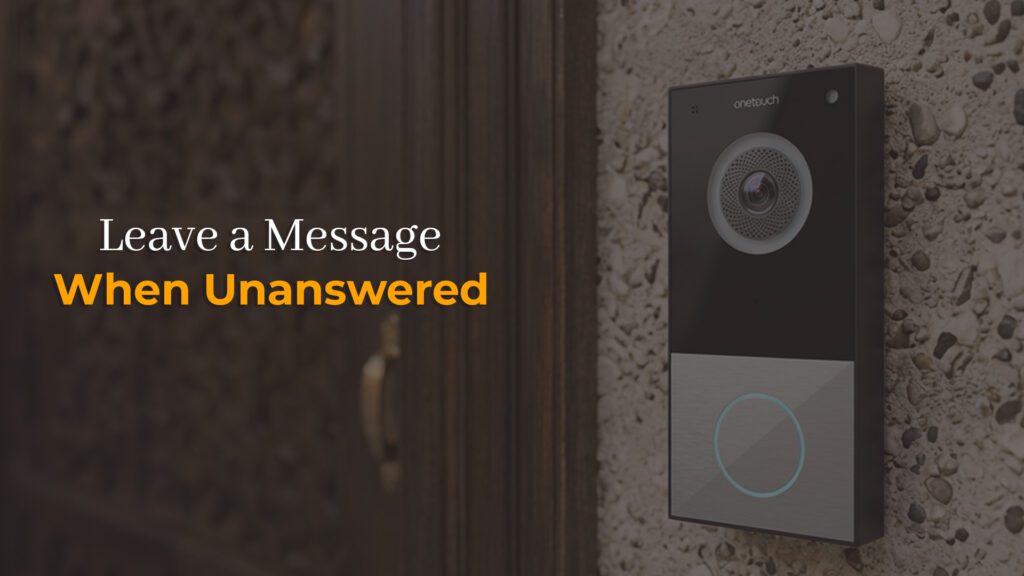
If the doorbell goes unanswered after a set period of time, the doorbell itself plays a pre-recorded prompt asking the visitor to leave a voice message right at the door. The visitor records their message. The resident receives it when they are free.
That is it. The visitor feels heard. The resident stays informed. Nothing falls through the cracks.
A USPS report found at least 58 million packages were stolen in 2024 alone, causing $16 billion in losses — and that is only the packages that were tracked. The missed visits, the unsigned documents, the unlogged guests — those numbers are invisible. But they are felt every single day in homes everywhere.
The Leave a Message feature does not just solve a convenience problem. It closes a gap that most homeowners did not even realize was open — until they needed it closed. A home that stays connected to every knock on the door, even when you cannot be there.
Why OneTouch?
There are plenty of doorbells in the market. Most of them ring. Some of them record. But very few are built around the question of what actually happens when something goes wrong — or when life simply gets in the way.
OneTouch is not just a doorbell brand. It is a security system built around real situations, real residents, and the real gaps that most builders and homeowners only notice after they have already faced them.
The SOS feature and the Leave a Message feature are not afterthoughts. They are the reason these doorbells exist.
Why Builders & Architects Are Choosing to Build Smarter
The builders and architects who are integrating smart doorbell features into their projects today are not doing it because they have to. They are doing it because they understand something simple — that the homes people love living in are the ones that thought of everything.
Every detail that goes into a project is a reflection of the thought and care that went behind it. The flooring. The fittings. The lobby. And yes — the door. Because the door is the one thing every resident interacts with multiple times, every single day.
When security is already thinking ahead before a problem even reaches the resident — that is when a project stops being just well-built and starts being genuinely well-designed.
Residents remember that. They talk about it. And they come back to the builder who gave them that feeling.
Frequently Asked Questions
What is the SOS feature on a smart doorbell?
The SOS feature allows a person outside the door to press and hold the doorbell button, which instantly places a direct call to the security guard downstairs. It is designed for emergency situations outside the home — such as a medical emergency, a threatening situation, or anyone needing immediate help — where every second counts.
How does the Leave a Message feature work on a smart doorbell?
If the doorbell goes unanswered after a set period of time, it automatically plays a pre-recorded prompt asking the visitor to leave a voice message at the door. The resident receives the message when they are available, ensuring no visit is ever missed or unaccounted for.
Why should builders and architects integrate smart doorbell features into residential projects?
Smart doorbell features like SOS and Leave a Message directly improve resident safety and daily convenience from day one. Buildings with these features pre-installed offer a measurable quality-of-life upgrade that makes projects easier to sell, more competitive, and more trusted by residents long after handover.
Is the smart doorbell market growing?
Significantly. The global smart doorbell market exceeded $1.28 billion in 2024 and is projected to reach $6.9 billion by 2033, growing at a CAGR of 20.6%. For builders and homeowners, moving early means moving smart.
What makes a smart doorbell with SOS and Leave a Message different from a standard video doorbell?
Beyond standard video and two-way audio, a doorbell with these features includes an SOS function — which directly connects to a security guard in an emergency with one long press — and a Leave a Message function — which ensures visitors can always leave a voice note when the resident is unavailable. These are not generic features. They are built around how people actually live and what actually goes wrong at a door.