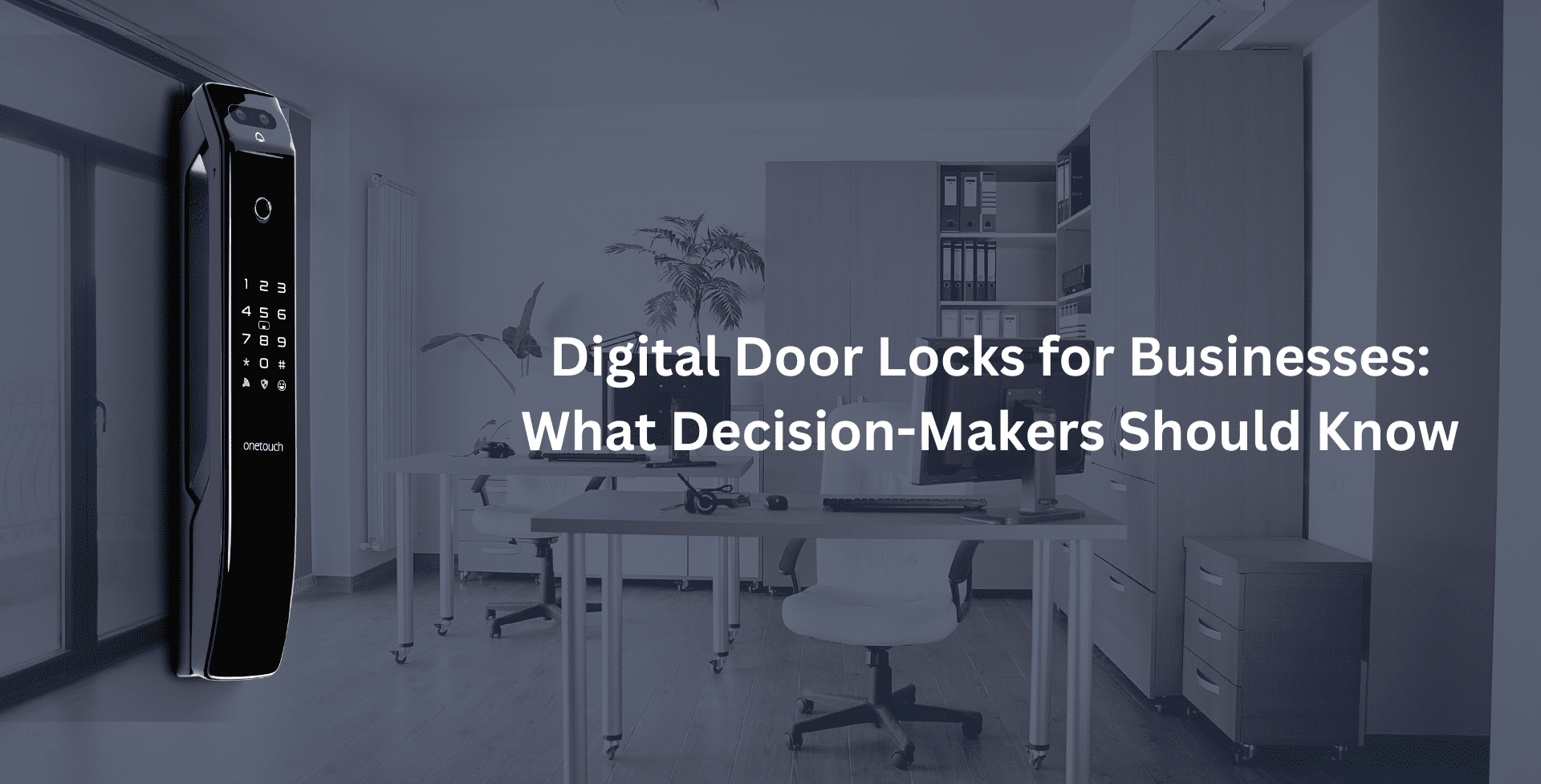
The traditional brass key has become quite a problem in modern workplaces. Keys get copied, lost. Someone leaves the company, and the key is still floating around somewhere in a drawer or a jacket pocket. Multiply that across employees, cleaning staff, vendors, contractors, and suddenly the whole thing turns into a management headache.
That’s why more companies are moving toward digital door locks for businesses. What used to feel like a fancy upgrade now feels like basic infrastructure. Offices in 2026 aren’t just trying to lock doors. They’re trying to manage access intelligently.
The move to commercial smart door lock systems addresses many of those everyday friction points. Access can be granted instantly and revoked instantly, with no locksmith visits. No replacing entire locks because someone misplaced a key.
And when you step back, the real digital door lock benefits for offices go beyond security. They simplify operations. They reduce risk. They give organisations a controlled way to manage who can enter and when they can. In other words, the door stops being a weak point and becomes part of the security system.
Digital Door Lock Benefits for Offices
Moving to digital door locks for business isn’t solely about ditching keys. It changes how access is managed altogether. Perhaps the biggest change is control. With commercial smart door locks, access can be granted or revoked in seconds. A new employee joins, a contractor needs temporary entry, or someone leaves the company. You update permissions from a phone or computer, and it’s done.
Another silent advantage is visibility. The real benefits of digital door locks for offices show up in the audit trail. Every entry is logged with a timestamp, so sensitive areas like server rooms or storage spaces are no longer blind spots.
And there’s a signal it sends too. When visitors see modern, pick-resistant locks instead of worn brass cylinders, it tells them something about the organisation. Security isn’t an afterthought. It’s built into the way the workplace runs.
What Features Should Business Digital Locks Have?
Choosing locks for an office isn’t the same as choosing one for a house. Digital door locks for businesses must withstand constant use: dozens, sometimes hundreds, of openings a day. If the hardware isn’t built for that rhythm, it wears out fast.
User capacity is the first thing most companies overlook. Offices grow, teams change, contractors come and go. Good commercial smart door lock systems need room for that churn. Something like the Onetouch OT-210, with space for 100 fingerprints and 100 RFID tags, makes that kind of scaling manageable.
Flexibility matters, too. The real pros of digital door locks for offices show up when people aren’t stuck with a single entry method: fingerprint, PIN, RFID card, or mobile app. If someone forgets one, they still get in without turning it into a support problem.
Discover How Onetouch Can Simplify Your Office Access.
Then there’s the physical side. The mortise inside the door is doing most of the real work. Strong stainless steel systems, such as the SS304 four-bolt setup in the OT-500, hold up far better under pressure and daily wear.
Power backup is another small detail that becomes important very quickly. Most professional locks run on long-lasting battery packs and include USB-C emergency power ports. Should the batteries run dry, you can still wake the lock with a power bank and get inside.
Finally, the smarter defences. Wrong-password lockouts that pause the keypad after repeated failed attempts. Tamper alarms that react if someone tries to force the unit. These are the kinds of protections that make digital door locks for businesses part of a real security system rather than just a fancy handle.
How to Choose a Digital Door Lock System for Business Security
Picking the right system isn’t really about buying one lock and putting it everywhere. Offices rarely ever work the way. Different spaces need different levels of control, which is why commercial smart door lock systems work best when you think in zones.
To ensure you’re getting the best digital door lock for office buildings, follow this evaluation framework:
- Map Your Access Zones
Start by mapping access points. Main entrances deal with the most traffic, so they need fast biometric recognition and reliable hardware. Something like the OT-210 works well there. Internal cabins or storage rooms usually don’t need that level of complexity, so simpler RFID or PIN-based options like the OT-300R can do the job.
- Prioritise Retrofit Capability
In many offices, replacing doors simply isn’t practical. Good digital door locks for businesses should fit standard wooden or metal doors without major modifications. Systems designed for easy retrofit save time and avoid construction headaches.
- Evaluate Connectivity Needs
If your management team needs to revoke an employee’s access across multiple city branches instantly, a Wi-Fi-enabled system is essential. However, if you only need local access to a single suite, a Bluetooth-based system might be a cost-effective way to gain digital door-lock benefits for offices.
- Check for VDP Integration
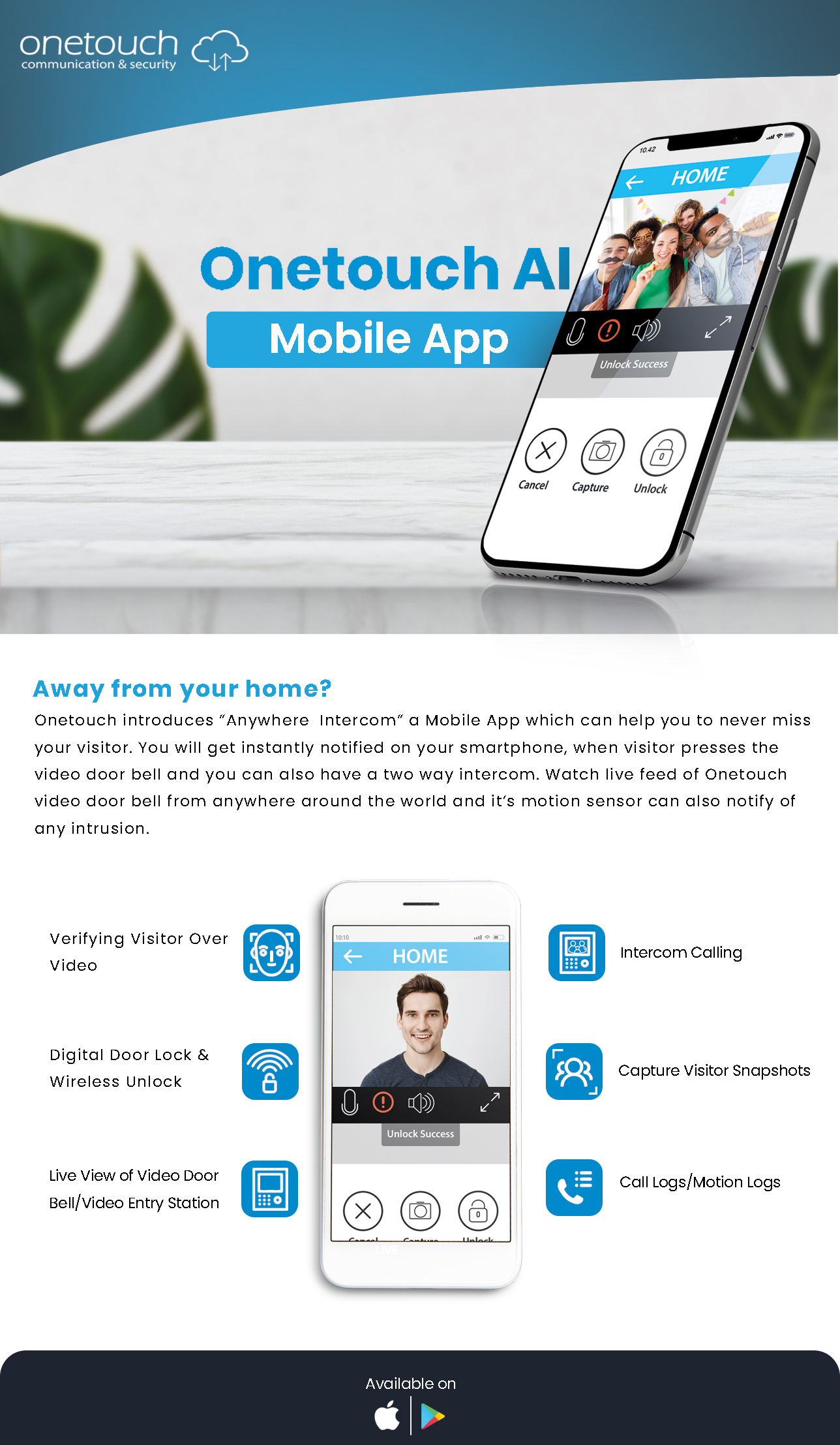
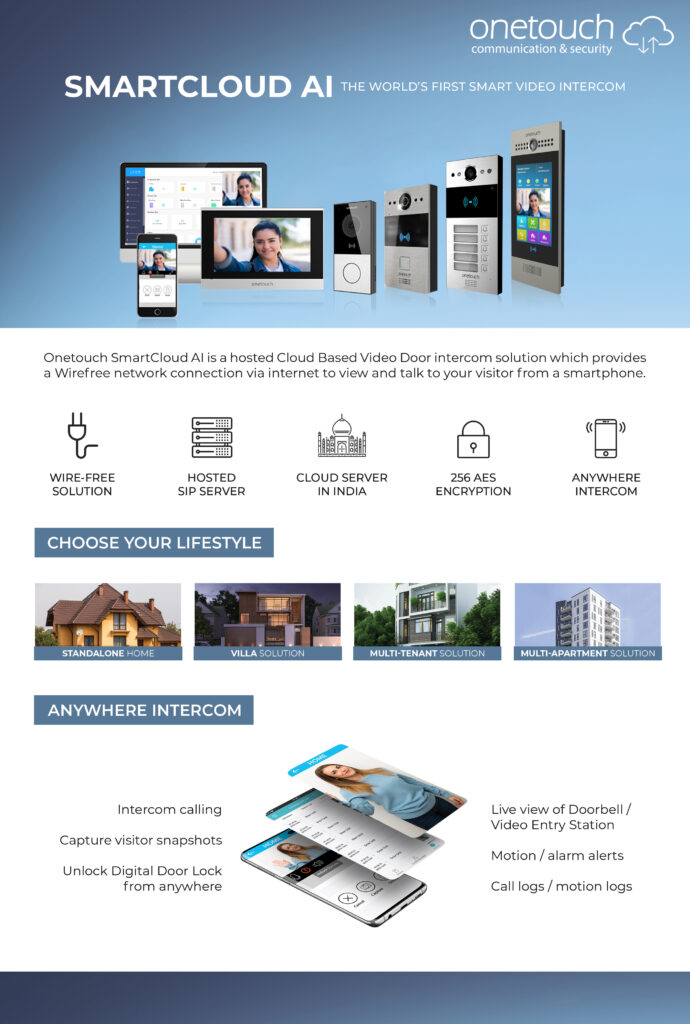
A truly secure office entrance uses a multi-layered approach. Choosing a lock that integrates with Video Door Phones (VDP) lets your front-desk team visually verify a visitor and unlock the door remotely from an indoor monitor or mobile app—a major boost to visitor access control in commercial offices.
- Focus on Physical Mortise Strength
Smart features are great, but don’t let them distract you from the “lock” part. Strong SS304 stainless steel systems, such as the one used in the OT-500, provide the mechanical strength businesses rely on.
Onetouch: The Professional Choice for Commercial Security
Onetouch has become a strong name in commercial smart door lock systems across India. What makes it work for offices is the focus on durability and practicality. These locks are built for busy entrances, not occasional home use. When companies choose Onetouch, they’re usually looking for dependable digital door locks for businesses that can handle daily traffic without becoming a maintenance problem.
- For main entrances, the OT-500 tends to be the flagship pick. It uses the SS304 four-bolt mortise, locks itself after repeated incorrect attempts, and integrates smoothly with our office video door phone systems. It’s designed for the front door where security pressure is highest.
- The OT-210 and OT-200T handle executive cabins and high-frequency access areas well. Their fast semiconductor biometric sensors make entry quick, and the zinc or aluminium alloy construction keeps them reliable over time.
- For internal zones, the OT-300 series keeps things simple. The OT-300B uses biometrics, while the OT-300R offers RFID and PIN access. Both fit standard doors and make it easy to manage different access levels across departments.
This very balance between strong hardware and flexible access is precisely where the advantages of digital door locks for offices show up. Security stays tight, but daily operations don’t slow down!
Get a Custom Security Audit for Your Business – Talk to Onetouch.
FAQs
Q. Are digital door locks for businesses pick-proof?
Yes. By eliminating the traditional keyhole, professional digital door locks for businesses remove the primary physical vulnerability that intruders exploit. Models like the OT-500 use a 5-bolt SS304 mortise for maximum resistance.
Q. How long do batteries last in commercial smart door lock systems?
In a typical office setting, high-capacity systems like the OT-500 can last for several months on a single set of 8 AA batteries. They feature low-voltage alarms to notify maintenance teams well in advance of a power failure.
Q. Can I manage multiple office locations from one app?
Absolutely. One of the neat digital door lock benefits for offices: Wi-Fi-enabled smart door lock systems can be linked to a centralised IoT app, allowing you to manage access permissions for branches across different cities from a single dashboard.
Q. Is it difficult to install smart locks on office metal doors?
Not with the right hardware. Onetouch locks are designed for easy retrofit on both wooden and metal doors, provided the door thickness is between 35 and 60mm.